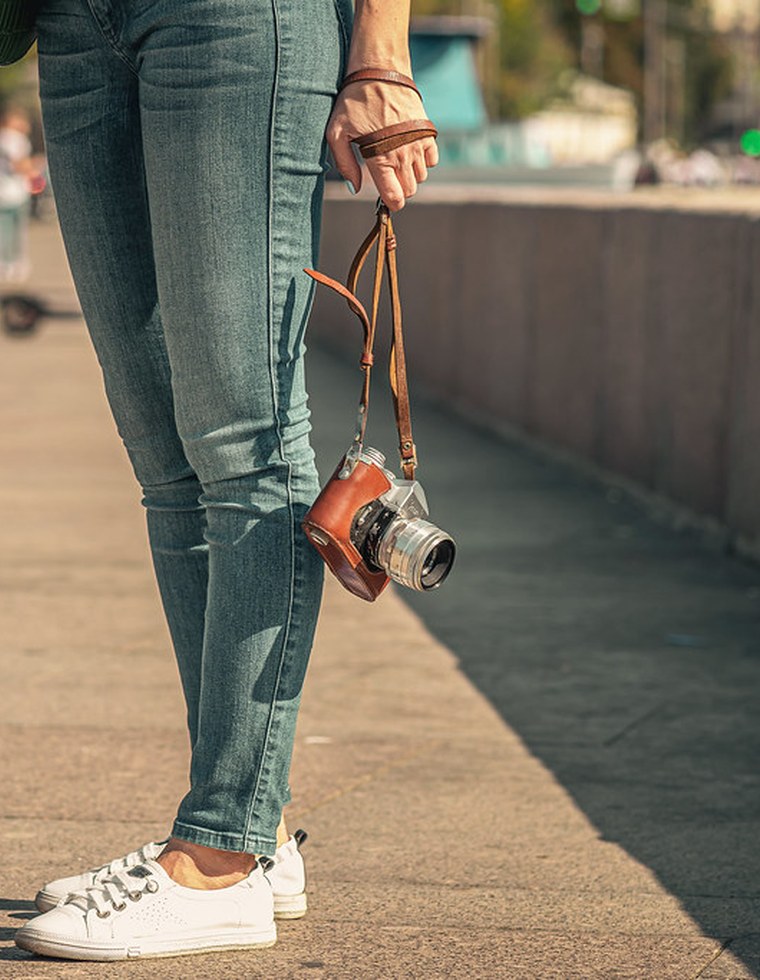
Kristina Sherk has spent years behind a camera. She is also building GenerAItion Headshots, an AI headshot app. She can look at a face and notice when skin has been smoothed too far. She can feel when a photo has slipped out of the person and into the plastic version of the person.
That is taste. It is also experience. Most of the time, people who have it do not stop to write it down. Then AI shows up and asks for instructions.
Kristina said trying to automate her work made her realize that her eye, style, and experience were really thousands of tiny choices she had not had to put into words. She could spot over-smoothed skin right away. Teaching AI to spot it took weeks.
AI is making people explain the parts of their work they used to just know. And once the work can be explained, some of it can be copied.
The job splits in two
Kristina does not think every kind of photography is in the same danger. A maternity shoot is a real room, a real person, and a moment that cannot be rerun. A first birthday shoot carries more than a file. A wedding, a family event, a public moment, a nervous kid, a real hug, a look between people who know each other — all of that still needs somebody there.
Presence matters. But headshots are different. So are many product photos, food shots, fashion shots, and other jobs where the customer mostly needs a finished image that looks professional enough.
Before AI headshots, a person had to find a photographer, book a time, clear a schedule, maybe hire makeup, sit for the photos, choose images, wait for retouching, and finally get the files. Now that same person can sit on the couch in pajamas, upload selfies, and get something usable.
That does not mean every AI headshot is good. It does not mean every photographer is doomed. It means the customer has a new question: Do I need the full human process, or do I just need the result?
The easy part was building it
One of Kristina’s answers should make a lot of people sit up. She said coding the app was easier than she expected. She could manage from the top: I like this, I do not like that. Claude would create code for her to copy into the terminal, and the change would show up on the website.
A photographer did not have to become a traditional software engineer before building a tool that pressures part of her own industry. She could steer. The AI could make. She could react. The app could improve.
The hard part was keeping the person
The harder part was consistency. A person uploads photos of themselves. The AI makes a version that looks almost right. Then the next version has a slightly different face. A different jaw. Different eyes. A more generic person.
The output can look better while becoming less true. Kristina said the prompts had to become hundreds of words long just to keep the person’s identity from drifting between versions.
Read that again in plain English: it took a lot of instruction to keep the AI from turning a real person into a polished stranger.
AI is built to make things smooth. The human job may be to stop it from smoothing away the person.
What this means if you are watching your own job
This story reaches beyond photographers. It is about any job that mixes repeatable output with human judgment. Ask two questions.
First: what part of the job is mostly a product? That part is exposed. If the customer wants a finished file, a clean image, a short answer, a simple plan, a form, a logo, a caption, a slide, or a basic draft, AI will push hard on price and convenience.
Second: what part of the job depends on presence? A real moment. A trusted person. Taste under pressure. Knowing when something looks good but feels wrong. Helping someone relax. Reading the room. Protecting identity. Carrying the blame if the result hurts someone.
The uncomfortable lesson is that taste is not magic dust. It is a pile of decisions made so often that the person stops noticing them. AI forces those decisions into the open.